
Cast stone fireplace install guide.
Step-by-step for the one-piece cast stone surround, the three-piece cast stone mantel, and the wall-hung mantel shelf. Pick the guide that matches your crate.
Step-by-step for the one-piece cast stone surround, the three-piece cast stone mantel, and the wall-hung mantel shelf. Pick the guide that matches your crate.
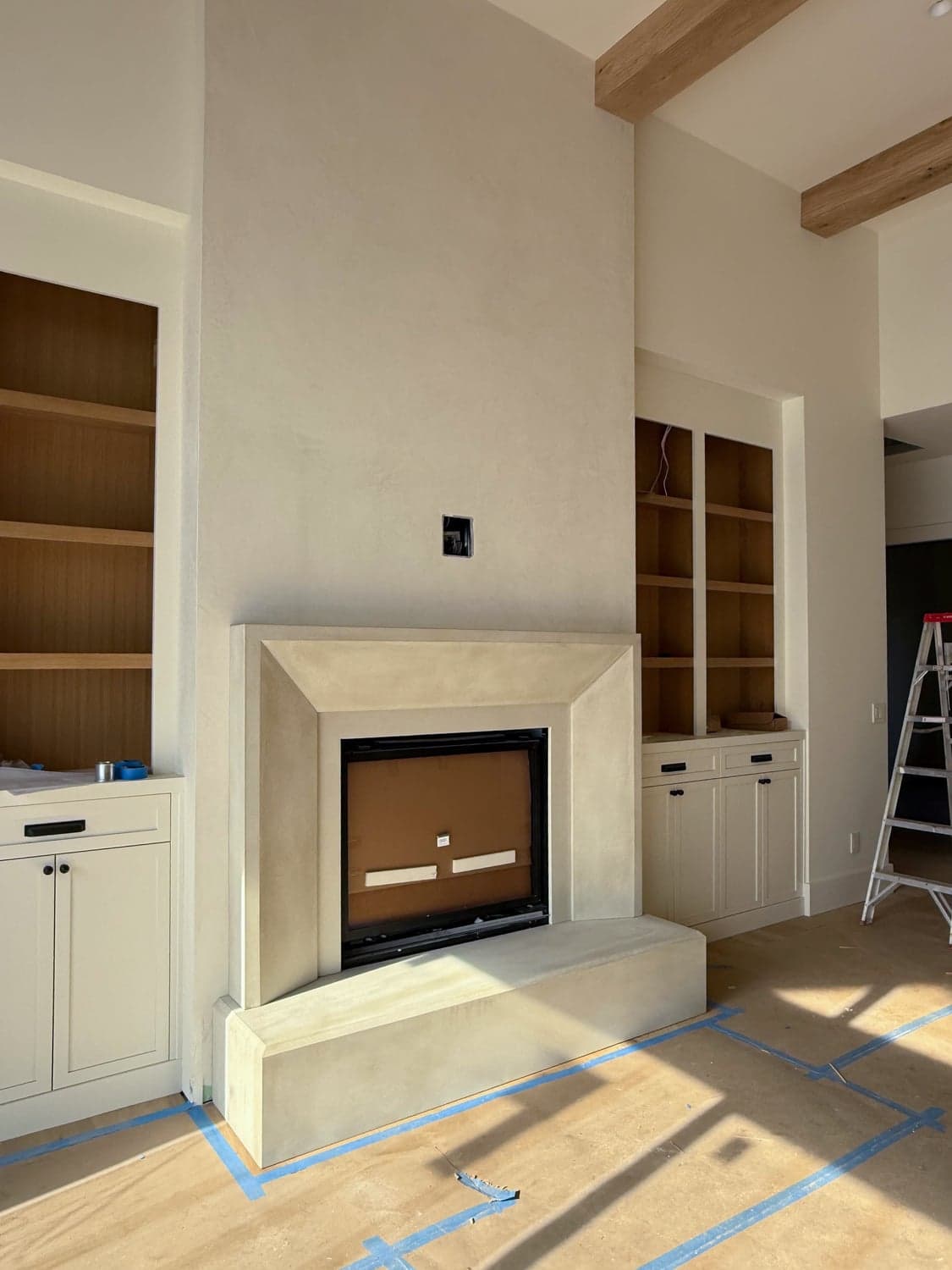
Newport, Verona, and similar one-piece units ship as a single cast that wraps the firebox. A single long ledger across the back carries the weight; the cast stone screws into it from behind.
If you have a hearth, dry-fit it first. Lay a continuous bead of construction adhesive on the subfloor where the slab will sit. Set the slab, check level, shim from below if the floor reads off. Wipe any squeeze-out immediately with a damp rag.
If the hearth is thicker than 1", drive 4" wood screws through the back edge into the wall stud (discreet, not visible). For 1" hearths, construction adhesive alone is sufficient. For two-piece miter hearths (60"+ lengths), fill the miter joint with color-matched caulk before moving on.
Filler panels (the narrow trim between the firebox opening and the surround) come in the crate. Dry-fit them first. Mark anchor points on the outer edge of each panel, never the face. Once the surround is set, its face covers those holes.
Pre-drill the marked points on each panel. Anchor to the wall through the outer edge using sheetrock anchors (drywall) or wood screws into a stud (preferred). Confirm plumb against the wall before moving on; the surround will reference off these.
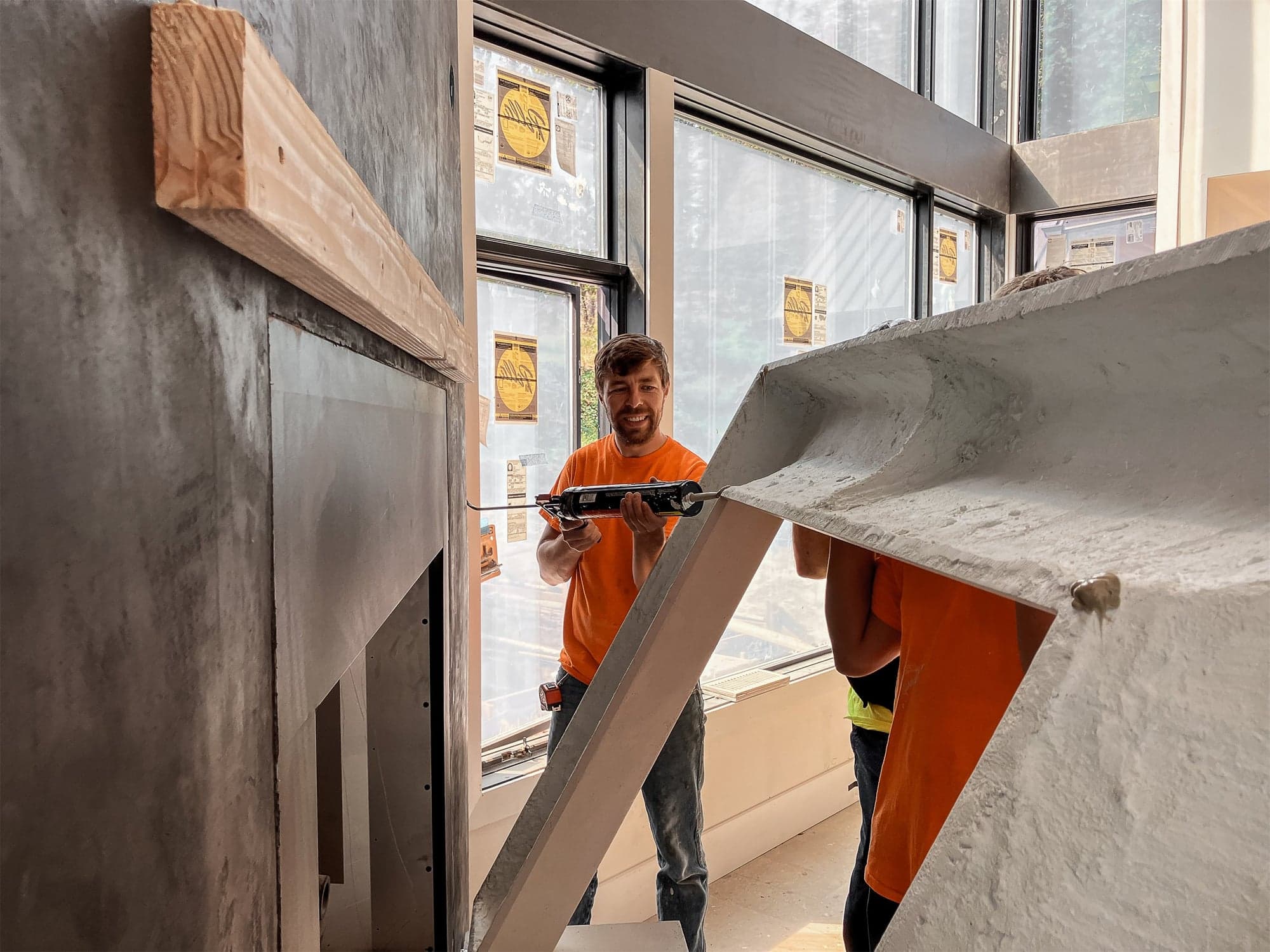
Locate the studs across the width of the surround and mark a level horizontal line where the back-top edge of the unit will sit. Cut a 2x4 that catches at least two studs and screw it flat to the wall along the marked line with 4" wood screws, into stud, never drywall alone. The ledger carries the weight.
Lay a soft-cloth blanket on the floor and uncrate the unit. Three installers minimum on Verona / Newport sizing; two on smaller models. Apply construction adhesive in an "S" pattern across the back face (corners and centerline), leaving 1" gaps for ventilation. Walk the surround up to the wall, set it onto the hearth (or against the wall if no hearth), and slide the back-top against the ledger. Check sight-lines with a 4ft level across the top. The reveal between the firebox opening and the inside edge of the surround should read 1/2" to 1" depending on model.
Drive 4" wood screws diagonally through the back of the surround into the ledger, typically four to six screws across the width. The pre-cast pockets on the back face are sized for this; never drill into the visible front face. Tighten snug, not crushing. Over-torque hairlines the cast stone. Once the screws are set, work the concrete stain from the finish kit over each screw spot (two thin coats, 30 minutes between) until the spot disappears into the surrounding finish.
Where the surround meets the wall, the filler panel, and the hearth, fill each joint with the color-matched sanded caulk that ships with every order. Tool with a fingertip and a damp sponge to leave a hairline shadow, not a bead. For lighter colors, mask the surrounding face with painter's tape before tooling.
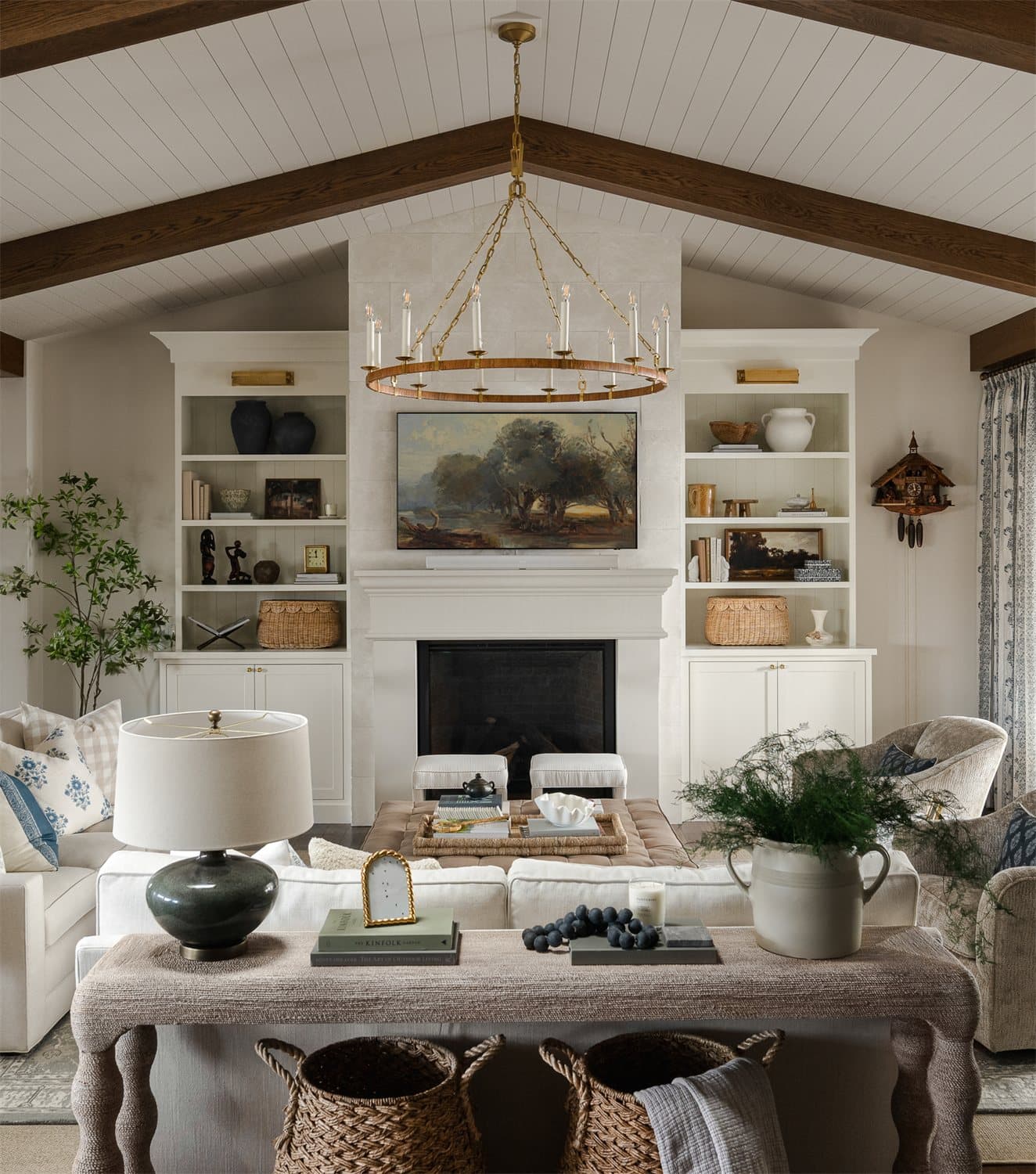
Hearth, two legs, mantel. Each piece anchors to its own hidden 2x4 ledger behind it; cast stone never carries its own weight on a screw. Order matters: hearth first, mantel last.
If you have a hearth, dry-fit it first. Lay a continuous bead of construction adhesive on the subfloor where the slab will sit. Set the slab, check level, shim from below if the floor reads off. Wipe any squeeze-out immediately with a damp rag.
If the hearth is thicker than 1", drive 4" wood screws through the back edge into the wall stud (discreet, not visible). For 1" hearths, construction adhesive alone is sufficient. For two-piece miter hearths (60"+ lengths), fill the miter joint with color-matched caulk before moving on.
Filler panels (the narrow trim between the firebox opening and the legs) come in the crate. Dry-fit them first. Mark anchor points on the outer edge of each panel, never the face. Once the leg is set, the leg face covers those holes.
Pre-drill the marked points on each panel. Anchor to the wall through the outer edge using sheetrock anchors (drywall) or wood screws into a stud (preferred). Confirm plumb against the wall before moving on; the legs will reference off these.
Cut two short 2x4s, one for each leg. Position each ledger 3/4" inside the outer edge of where the leg face will sit, vertical against the wall, plumb. Screw into the wall stud with 4" wood screws. The leg will hide the ledger completely once set.
Lay a soft-cloth blanket on the floor and uncrate each leg. Apply construction adhesive in an "S" pattern across the back face (corners and centerline), leaving 1" gaps for ventilation. Walk each leg into position against its ledger and press into place. Drive screws diagonally through the back of the leg into the ledger; never drill into the leg face. Check sight-line alignment with a 4ft level across both legs. The reveal at the firebox opening should read 1/2" to 1" depending on model.
With the legs set, measure the mantel: width, depth, and the height of the back face that will contact the wall. Mark a level horizontal line where the back-top edge of the mantel will land. This is your ledger position.
Cut one long 2x4 spanning the full width of the mantel and catching at least two studs. Screw it flat to the wall along the marked line with 4" wood screws into stud. Confirm level one more time: if the ledger is level, everything after it lines up.
Apply a 3/8" adhesive bead across the top of both legs and across the top edge of the ledger. With three installers, walk the mantel up and set it onto the legs, back face flush against the ledger. Drive 4" wood screws diagonally through the back of the mantel into the ledger, two to four screws depending on length. Tighten snug, not crushing. Once the screws are set, work the concrete stain from the finish kit over each screw spot (two thin coats, 30 minutes between) until the spot disappears into the surrounding finish.
Where leg meets mantel, where leg meets filler panel, and where leg meets hearth, fill each joint with the color-matched sanded caulk that ships with every order. Tool with a fingertip and a damp sponge to leave a hairline shadow. For lighter colors, mask the surrounding face with painter's tape before tooling.
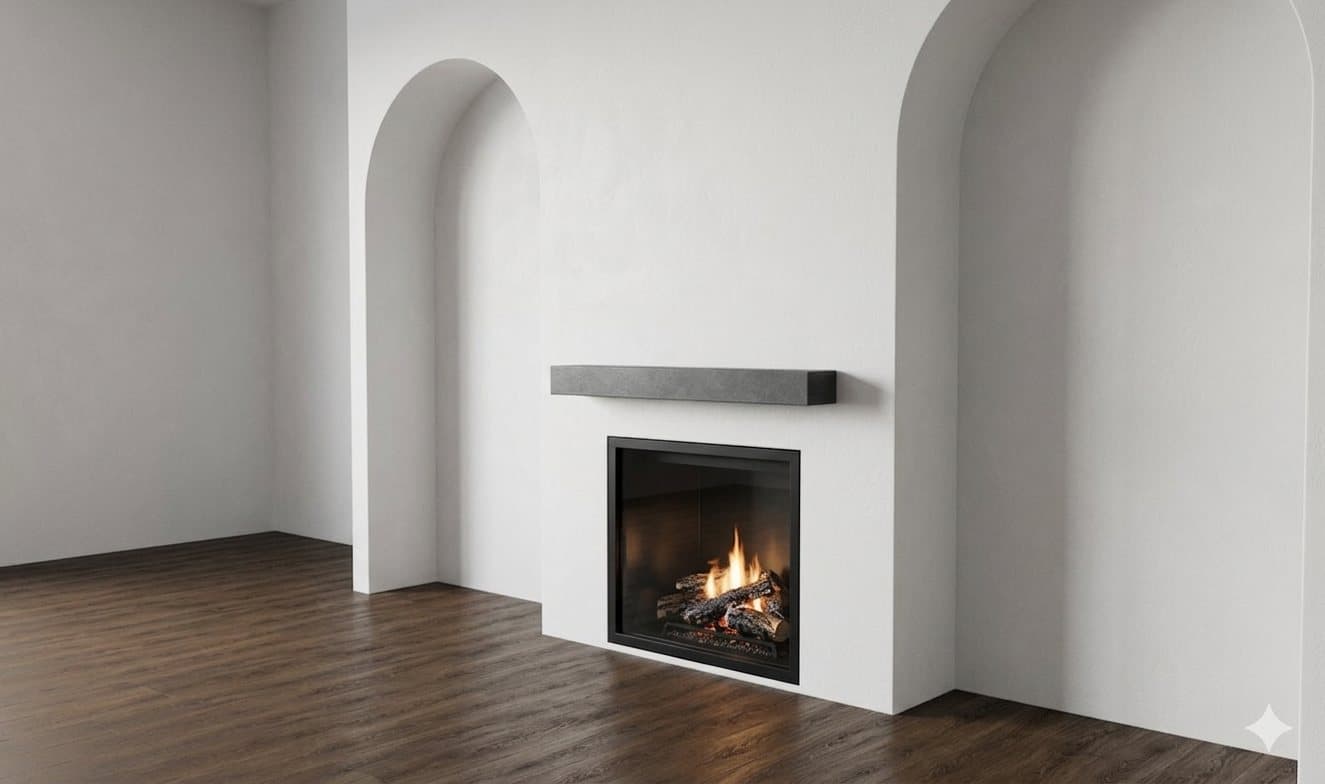
A single cast piece against a single horizontal ledger: no firebox surround, no legs. The hardest part is locating studs and getting the ledger level; the stone itself sets in minutes. See the three shelf profiles.
Locate the studs above the firebox and mark a level horizontal line where the back-top edge of the shelf will sit. Cut a 2x4 to a length that catches at least two studs and screw it flat to the wall with 4" wood screws, directly into the stud, not into drywall alone. The ledger carries the weight; the wall does not.
Lay a soft-cloth blanket on the floor and uncrate the shelf. Apply a 3/8" bead of construction adhesive across the top edge of the ledger. Walk the shelf up to the wall with two installers, slide its back face flush against the ledger, and press into place. Drive 4" wood screws diagonally through the back of the shelf into the ledger, two to four screws depending on length. Never drill into the visible front face. Once the shelf is set, work the concrete stain from the finish kit over each screw spot (two thin coats, 30 minutes between) until the spot disappears into the surrounding finish.
Where the shelf meets the wall, fill the joint with the color-matched sanded caulk that ships with every order. Tool with a fingertip and a damp sponge. The seam should read as a hairline shadow.
The finish kit (concrete stain, concrete-mix powder, and color-matched caulk) ships with every order, and surround and mantel crates include the filler panels unless your design leaves them out. Framing lumber, anchors, and the adhesive are sourced locally.
Every model has its own spec sheet with dimensions, estimated weights, finish options, and install notes. They download free from the spec library, no sign-up needed. For CAD blocks and 3D files, tell us the model and we’ll email them.
Stuck mid-install? Call us at (971) 314-9530, Monday to Friday, 8 a.m. to 4 p.m. Pacific. We answer the phone and can talk you through it.
Ten questions general contractors, architects, and homeowners ask before, during, and after install.