

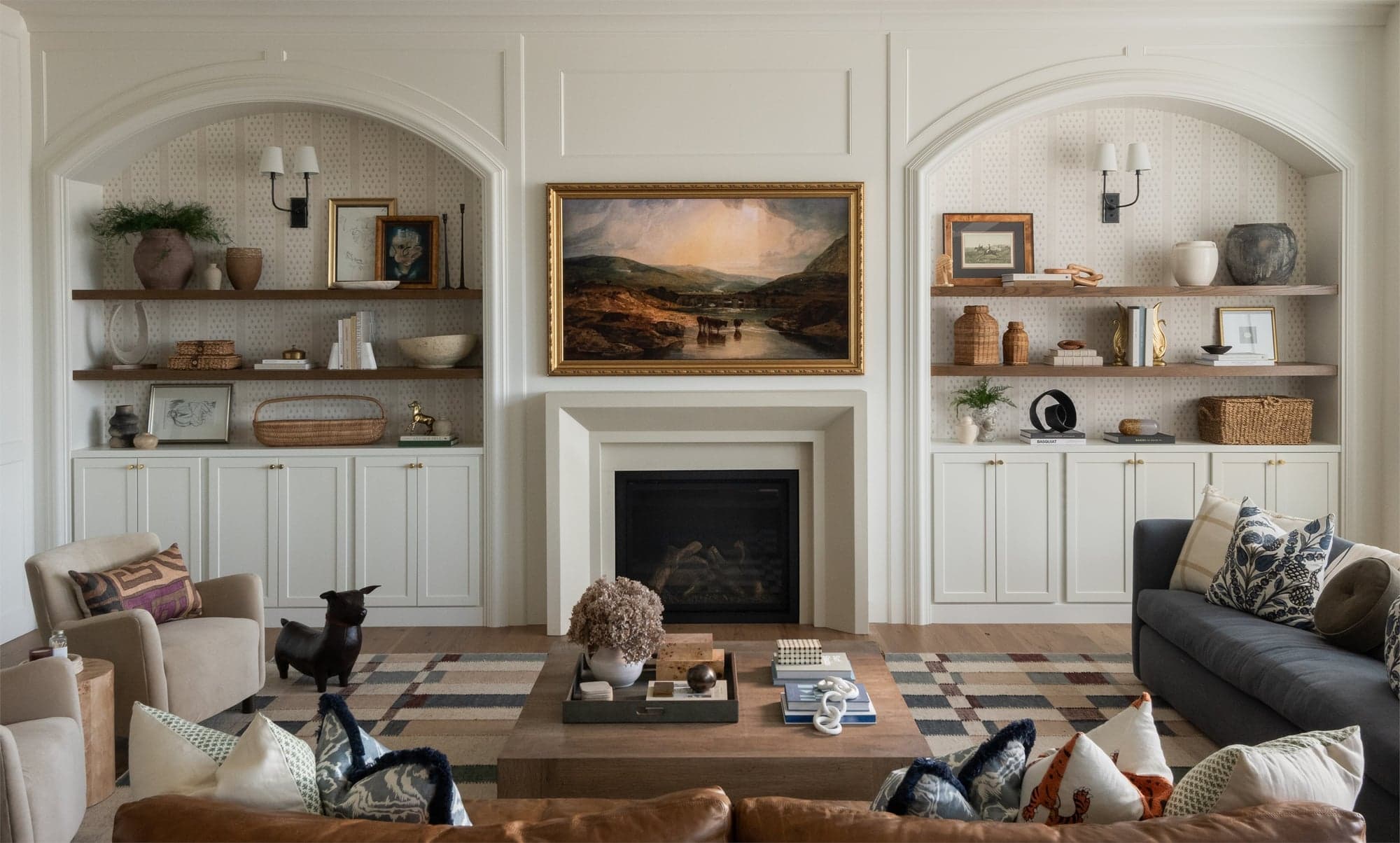
Fireplace surround materials.
Cast stone, limestone, marble, concrete, brick, tile, and wood, compared on what actually decides a project.
For most homes the best fireplace surround material is a stone or stone-like material. Cast stone is the common default: made mainly of mineral materials, lighter and less expensive than solid stone, and moldable to custom profiles. Natural limestone and marble win on authenticity at a higher cost and weight; porcelain and tile suit low-maintenance modern rooms; brick suits rustic character.
Start with three constraints.
Choosing a surround material gets simpler when you order the decision. First, the firebox: its manual sets the clearances around the opening, and local code has the final word, which keeps wood to mantel shelves and overmantels. Second, the look: traditional ornate stone, clean modern stone, veined marble, rustic brick, or a sleek tile slab. Third, weight: solid stone is heavy enough to need added structural support, while cast stone and tile are comparatively light.
Almost every project resolves to one of seven materials. Here is how they compare on the four attributes that actually decide a specification.
| Material | Cost (installed) | Weight | Install complexity | Design flexibility |
|---|---|---|---|---|
| Cast stone (GFRC) | $3,025 to $8,750, plus installation | Light | Low to moderate | High (molded to custom profiles) |
| Natural limestone | Higher than cast stone | Heavy | High | Moderate (hand-carved) |
| Marble | Usually the highest | Heavy | High | Moderate (cut from slab) |
| Precast concrete | $2k to $6k+ | Heavy | Moderate to high | Low to moderate (coarser detail) |
| Brick | $1k to $4k | Heavy | Moderate | Low (modular units) |
| Tile / porcelain | $1k to $5k | Light to moderate | Moderate | Moderate (surface only) |
| Wood mantel | $0.5k to $4k | Light | Low | High, but mantel/overmantel only |
Cast stone vs. natural stone.
This is the comparison most projects come down to. Cast stone is manufactured to look like cut stone; natural stone is quarried. Cast stone is lighter, more uniform in color, moldable to any profile or custom size, and less expensive (our standard models run $3,025 to $8,750 before installation). Natural stone offers genuine, one-of-a-kind veining and a premium feel, usually at a higher cost, with more weight and, for porous stones, more sealing and care. Choose cast stone for the classical stone look with custom geometry and a controlled budget; choose natural stone when authenticity is the whole point.
Cast stone vs. limestone.
Natural limestone is prized for its soft, even grain, which is exactly the look most cast stone is engineered to reproduce. The trade-off is familiar: natural limestone brings authenticity and resale cachet at higher weight and cost; cast stone delivers the limestone aesthetic with predictable color, custom sizing, easier installation, and a lower total cost of ownership. For period-correct restorations, natural limestone earns its premium. For new and transitional work, cast stone in a light Honed color is the pragmatic specification.
Cast stone vs. precast concrete.
The terms get used interchangeably, but there is a real distinction. Cast stone is a finish-grade architectural material: finely graded aggregate and pigment, formulated and finished to imitate cut stone, and judged on appearance. Precast concrete is typically a structural product with coarser aggregate and less surface refinement. GFRC is the bridge: a glass-fiber-reinforced way to cast stone that is lighter and stronger than dense traditional mixes. When a surround is described as “precast,” ask whether it is finish-grade cast stone or structural concrete, because the surface result is very different. The deeper material primer is in what is cast stone.
Match the material to the style.
- Traditional / classical: natural limestone or a richly profiled cast stone surround like the Louis XV.
- Transitional: cast stone in a light Honed color, the most versatile choice across rooms.
- Modern / contemporary: a clean cast stone reveal like the Como, or large-format porcelain.
- Farmhouse: brick, or cast stone with a simple squared profile.
- Rustic: brick, or a chunky wood mantel over a brick or natural stone base.
For the style-first version of this decision (how the six mantel styles differ and which models fit each), see the fireplace mantel styles guide.
Climate considerations.
For interior surrounds, installation and sealing matter more than climate. In a damp region like the Pacific Northwest, porous materials (natural limestone especially) should be well sealed to resist moisture. Cast stone is naturally porous too; ours is wet cast and ships sealed, so the surface has low porosity. For any exterior application, confirm the cast stone mix and finish are rated for outdoor exposure. See the care guide for the sealing cadence.