

Cast Stone Fireplaces in the Pacific Northwest
Each piece is handmade to order in Salem, Oregon, and takes six weeks to make. FedEx Freight then brings it to your Pacific Northwest project in 4 to 8 business days.
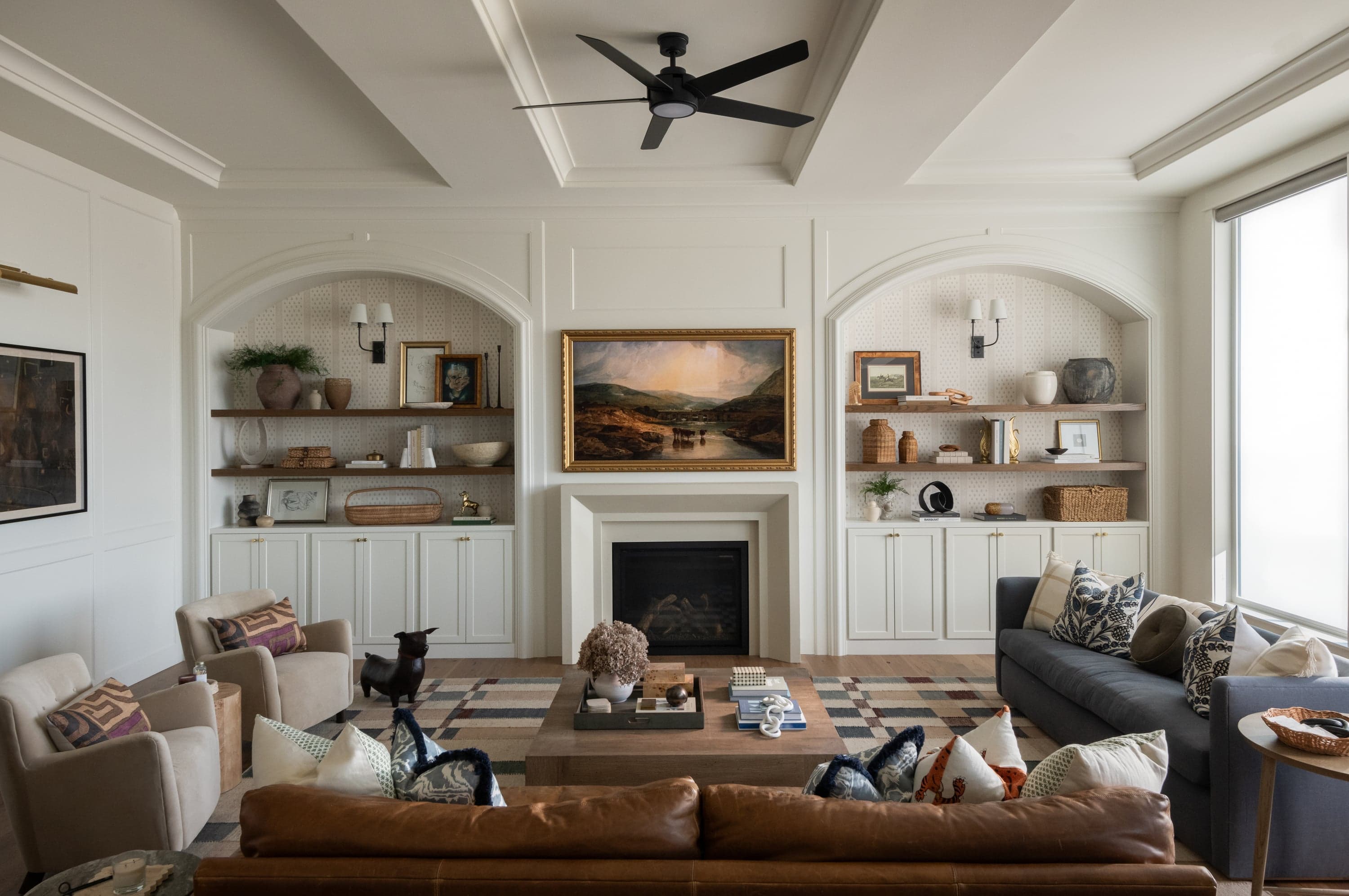
Each piece is handmade to order in Salem, Oregon, and takes six weeks to make. FedEx Freight then brings it to your Pacific Northwest project in 4 to 8 business days.
Oltre casts every fireplace surround in Salem, Oregon. For Pacific Northwest projects in Portland, Seattle, Bend, Boise, and Spokane, that means six weeks of production, then 4 to 8 business days of freight, with phone support through your install.
Homes in the Pacific Northwest lean toward natural, unfussy materials. Across Oregon, Washington and Idaho, builders and designers favor texture over ornament: weathered cedar, board-formed concrete, soapstone and limestone feel more at home here than polished marble.
Pacific Lodge and the broader Cascadian style (heavy timber, exposed stone, tall fireplace masses) remains the dominant new-build language across the Cascades, the Sammamish plateau, and the Bend high desert. Cast stone fills the same role as a reclaimed-rubble surround at a lighter install weight, and without the variance of natural quarried stock.
Craftsman is the region's second native style. The Portland and Seattle inner-city housing stock is heavy with original Craftsman and Foursquare homes built from 1900 to 1925, and remodels usually call for a fireplace surround that reads as period-correct: simple pilastered profiles, deep chamfered mantels, restrained corbels. Cast stone holds those crisp edges and is made in six weeks, without the long wait for natural limestone.
Modern Cascadia, the region's answer to coastal contemporary, is the third. It works in restrained palettes where a single material wall meets a slab hearth. A clean linear surround in cast stone (rather than steel or board-formed concrete) gives interior designers the warmth Cascadian modernism asks for without the cost of a custom slab fabricator.
Cast stone performs reliably across the Pacific Northwest's three distinct microclimates: the wet coastal zone, the mountain freeze-thaw belt, and the dry eastern high desert.
The coastal corridor (Portland through Puget Sound) sees high humidity and long wet winters but few hard freezes. Cast stone is naturally porous, but ours is wet cast and ships sealed, so the surface has low porosity and shrugs off the damp. Reseal every five years indoors and every year outdoors.
The Cascades and the Bitterroot belt of central Oregon, Idaho, and eastern Washington see real freeze-thaw activity. GFRC cast stone (glass-fiber reinforced concrete, made with a premix rated at 11,000 PSI) handles freeze-thaw cycling better than soft natural limestone, which can spall at masonry joints over decades of cycling. Most fireplace surrounds sit indoors, where freeze-thaw exposure is not a factor.
East of the Cascades (Bend, Spokane, Boise), you get more sun and less rain. Pick from eight standard colors, or ask us to match a color you already have (custom color matching is quoted with the project). Our $55 sample set has all eight colors, so you can see them in your own light before we make your piece.
We make every piece to order in Salem, Oregon. Production takes six weeks from the day your order is placed and paid. Freight then takes 4 to 8 business days. It ships crated by FedEx Freight, free on standard models anywhere in the contiguous 48 states. Need it sooner? Three-week production is available for 35% above list.
These profiles fit the home styles above. Each one is made to order in Salem, Oregon, and production takes six weeks.
Simple classical lines that look right in a Craftsman remodel or a modern Northwest home.
See the Newport model →A substantial Italian-style design for Pacific Lodge great rooms with heavy timber framing and a stone-mass fireplace as the focal element.
See the Verona model →A simple European design for transitional remodels in Portland and Seattle.
See the Lucca model →A coastal Mediterranean design that suits Modern Cascadia homes. In a light Honed color, it gives a limestone look against board-formed concrete walls.
See the Amalfi model →Clean Parisian lines for the higher-end Bend and Lake Oswego custom builds.
See the New French model →We ship nationwide from Salem, Oregon. Pick another region below, or see all the areas we serve.