

Cast Stone Fireplaces in the Mid-Atlantic
Each piece is handmade to order in Salem, Oregon, and takes six weeks to make. FedEx Freight then brings it to your Mid-Atlantic project in 4 to 8 business days.
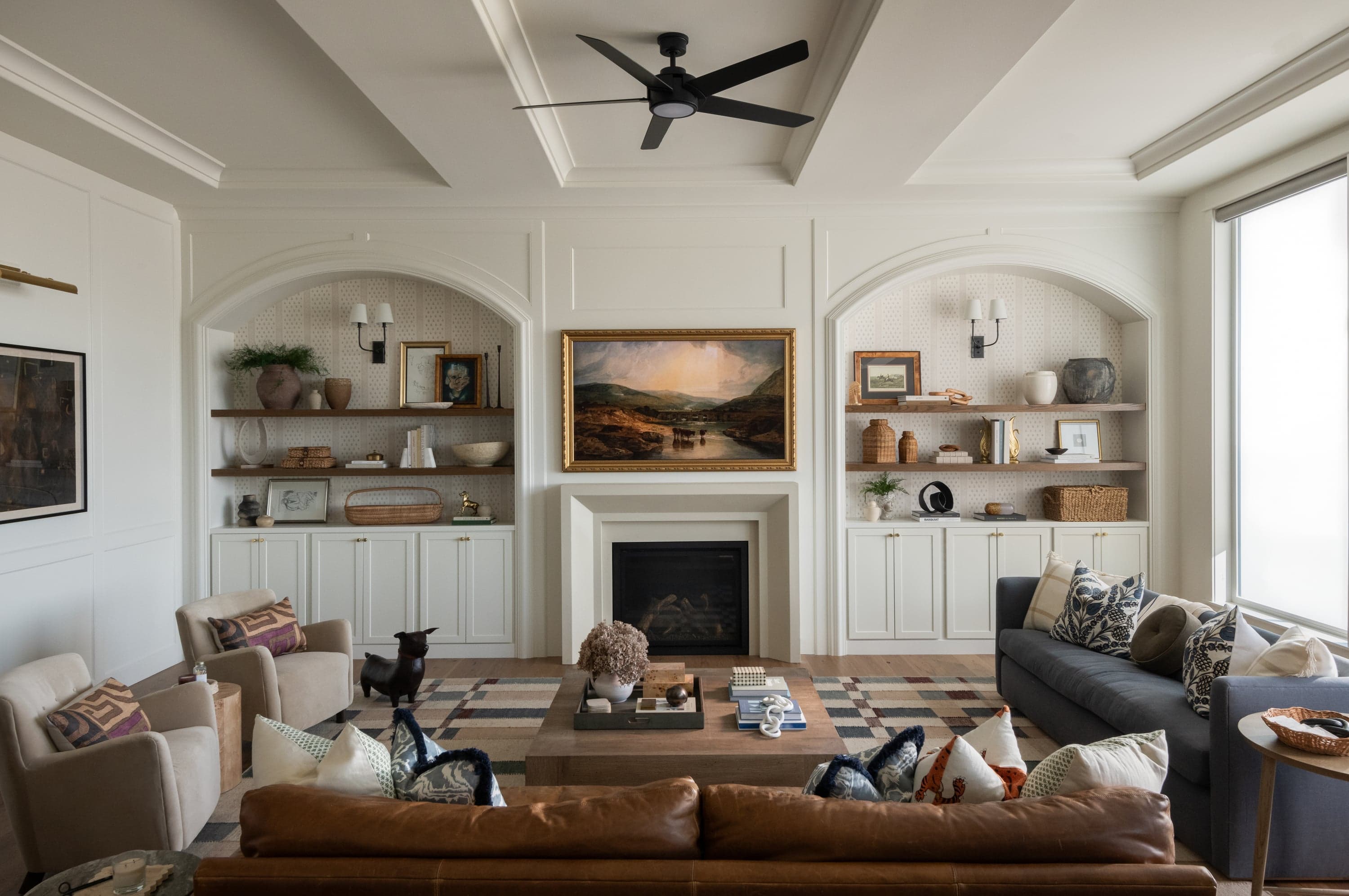
Each piece is handmade to order in Salem, Oregon, and takes six weeks to make. FedEx Freight then brings it to your Mid-Atlantic project in 4 to 8 business days.
Oltre ships cast stone fireplace surrounds to Washington DC, Northern Virginia, Philadelphia, Baltimore, Richmond, and the broader Mid-Atlantic from Salem, Oregon. Production takes six weeks from the day your order is placed and paid. Freight then takes 4 to 8 business days. Federal, Georgian, and Colonial Revival traditions all center on a classical fireplace surround.
The Mid-Atlantic carries the founding-era classical residential architecture of the United States: Federal, Georgian, Colonial Revival, Pennsylvania Dutch stone farmhouse. A classical fireplace surround is foundational across all of them and remains the default in new construction that follows these traditions.
Federal and Georgian define the historic stock across the Mid-Atlantic seaboard: Old Town Alexandria, Georgetown, Annapolis, Philadelphia's Society Hill and Rittenhouse, Princeton, the Brandywine Valley, and the Charlottesville-Richmond corridor. Pilastered surrounds with restrained cornice mantels, classical proportions, and Adam-style detailing are period-correct, and Oltre's Newport profile suits them.
Colonial Revival, the dominant new-construction language across Northern Virginia, the Maryland horse country, the Philadelphia Main Line, and the Bucks County and Hunterdon County exurban belt, extends the Federal vocabulary into 20th-century residential scale. Substantial fireplace surrounds with classical proportions remain the default.
Pennsylvania Dutch and the broader Mid-Atlantic stone-farmhouse tradition is the third style. Buckingham slate, Bucks County fieldstone, and the Brandywine Valley style work in heavier materials than the Federal coastal palette but keep the substantial fireplace anchor. Cast stone reads as a natural extension of this tradition, with cleaner edges than fieldstone and a faster install than original cut limestone.
The Mid-Atlantic spans real seasonal range: humid summers, freeze-thaw winters, and the salt-air corridor from Cape May through Rehoboth and the Eastern Shore. Cast stone handles all three with standard masonry maintenance.
In winter, freeze-thaw matters most, especially in the Pennsylvania, West Virginia, and western Maryland interior. GFRC made with a premix rated at 11,000 PSI handles freeze-thaw cycling better than natural limestone, which can spall at masonry joints over decades. Indoors, freeze-thaw isn't a factor, so this mostly matters for outdoor pieces.
Next comes summer humidity from June through August. Cast stone is naturally porous, but ours is wet cast and ships sealed, so the surface has low porosity. Indoors, reseal every five years.
There's also coastal salt air (Rehoboth, Cape May, the Eastern Shore, the Annapolis-to-St-Michaels arc, the Tidewater Virginia coast). Outdoor pieces get resealed every year, near the water or not.
We make every piece to order in Salem, Oregon. Production takes six weeks from the day your order is placed and paid. Freight then takes 4 to 8 business days. It ships crated by FedEx Freight, free on standard models anywhere in the contiguous 48 states. Need it sooner? Three-week production is available for 35% above list.
These profiles fit the home styles above. Each one is made to order in Salem, Oregon, and production takes six weeks.
Simple classical lines that look right in Federal, Georgian, and Colonial Revival homes across Old Town Alexandria, Georgetown, Annapolis, and Philadelphia.
See the Newport model →A substantial Italian-style design for Maryland and Northern Virginia estate-tier great rooms.
See the Verona model →Baroque silhouette for higher-end Charlottesville and Brandywine Valley historic-tradition projects.
See the Louis XV model →A simple European design for transitional Colonial Revival remodels in Washington DC and Philadelphia.
See the Lucca model →Clean Parisian lines for higher-end Georgetown and Rittenhouse Square pied-à-terre interiors.
See the New French model →Mediterranean profile that looks right in Tidewater Virginia and Eastern Shore custom builds with coastal European-style palettes.
See the Amalfi model →We ship nationwide from Salem, Oregon. Pick another region below, or see all the areas we serve.